About 2 months ago, I checked our ISP’s website about getting a dual-stack connection. The website said that our area was covered, but after enabling IPV6, our router didn’t seem to be picking up an IPV6 address. When I called their customer support, they assured me that we were not actually in an area with coverage, even though their site said otherwise. I forgot about this whole debacle until today.

This next week I’ll be packing up my bags and traveling up to Charlotte, North Carolina for the annual Southeast Linux Fest. This will be my second time attending; I have high hopes since last year was such a blast!
Update: Here are some pictures from SELF


Over the past couple of months I’ve gained a lot of experience with PHP as well as page design with CSS. I’ve spent time working on my test website discuss.nathancheek.com as well as working on the messaging part of Andy Y.’s Dropbox Forums extension.

My new Nexus 5 with stock Android Kit-Kat
I recently purchased a Nexus 5 from Google. I had a small script notify me when the red version came in stock on their website, so I was able to grab one before they sold out again. The site said it would be 2-3 weeks before shipping, so I was rather surprised to see that it shipped out that day. A little bit after it arrived, I installed CyanogenMod and also got it to dual boot Ubuntu Touch.
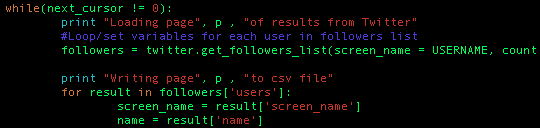
For a while, Twitter has offered an archive service. This is useful for keeping a backup of your tweets, but that’s exactly where it begins and ends. In fact it doesn’t even save photos in tweets so you are left with a very barebones archive. For a while I had wished for a better solution, something that could save every aspect about my Twitter account. I would like to be able to see who all my followers were, as well as who I was following at a point in time. I searched around online but couldn’t find a good solution to this. This weekend, I decided to build my own.